Narrow-staircase moves in Barbican: safe handling tips
Posted on 06/05/2026
Moving through a tight staircase is one of those jobs that looks simple until you're halfway up, the banister is brushing one side of a wardrobe, and someone is quietly saying, "steady... steady." In Barbican, where many homes and flats come with awkward angles, narrow landings, and less-than-generous turns, narrow-staircase moves in Barbican need more than brute strength. They need planning, the right handling technique, and a calm head.
This guide breaks down the safe handling tips that actually matter: how to prepare the space, how to move bulky items without turning the staircase into a hazard, and when it makes sense to bring in experienced help. Whether you're moving a sofa, a bed base, office furniture, or something more awkward like a piano, the same core rule applies: don't guess your way through a narrow route.
If you want a smoother move overall, it helps to read a broader planning guide too, such as top tips for a seamless and stressfree move, or get a feel for the wider service options on removals in Barbican.
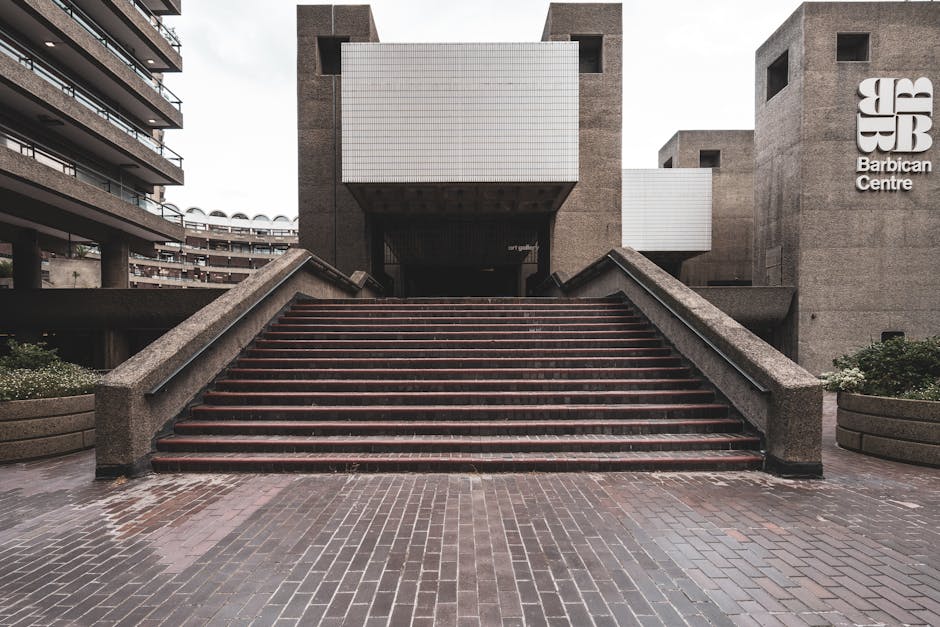
Why Narrow-staircase moves in Barbican: safe handling tips Matters
Narrow staircases create a different kind of moving problem. It's not only about weight. It's about width, height, balance, grip, turning space, and what happens when an item is a few centimetres too long for the landing. In a place like Barbican, that matters even more because many moves happen in flats, maisonettes, and buildings where access is tight and shared spaces need to be treated carefully.
A safe move protects three things: the item, the property, and the people handling it. Scratched walls, chipped stair edges, strained backs, and damaged furniture are the obvious risks. Less obvious is the way a rushed lift can throw off balance on a stairwell, which is exactly the sort of moment that turns a manageable move into a messy one.
There's also the emotional side. Let's face it, moving day already feels like enough. If the staircase adds stress, the whole job becomes harder. A good handling plan lowers the panic factor. You move more slowly, make cleaner decisions, and avoid that awful moment when everyone has to stop because nobody can quite see the next step.
Expert summary: narrow-staircase moves are rarely won by strength alone. The best results come from measuring first, stripping items down where possible, protecting the route, and using controlled team movement rather than rushing the lift.
How Narrow-staircase moves in Barbican: safe handling tips Works
The process is basically a sequence of small decisions that reduce risk. You first work out whether the item can physically pass through the stairwell. Then you prepare the item and the route. Then you move with coordination, not improvisation.
For standard furniture, this often means removing legs, cushions, drawers, doors, or detachable panels. For some items, it also means changing the angle of approach. A sofa may need to be carried upright. A mattress may flex enough to work around a corner, while a wardrobe often needs careful tilting to avoid catching on the ceiling line or handrail. For especially difficult pieces, professional teams may use carry straps, stair rollers, or protective padding, but only if the route and the load are suitable.
In practical terms, a narrow-stair move works best when everyone knows their role. One person leads, one supports, one watches the corners and landing, and nobody tries to "help" by shoving from an awkward angle. A move through a stairwell is a lot like threading a needle; one wrong correction can make things worse.
For bulky bedroom items, the article on moving a bed and mattress safely is a useful companion read, especially if you're dealing with awkward frame parts or a narrow turn.
What changes in Barbican properties
Barbican homes and apartments can involve shared corridors, older internal layouts, compact stair access, and building rules around noise, damage prevention, and timing. That means the move is not just a lifting problem; it's a space-management problem. You need to think about elevator access if there is one, time windows for loading, and how to keep common areas clear and respectful for neighbours. Small detail, big difference.
Key Benefits and Practical Advantages
Good handling is not only about preventing damage. It also makes the whole move more efficient and less draining, which is a huge win on a day when everybody's energy dips halfway through.
- Less risk of injury: controlled handling reduces twisting, sudden drops, and overreaching on stairs.
- Lower chance of property damage: padding, measurements, and route checks help avoid scuffs, dents, and scraped paint.
- Better protection for furniture: dismantling and wrapping items keeps corners, frames, and finishes in better shape.
- Faster decision-making: when the route has already been checked, the team spends less time stopping and starting.
- Less stress on moving day: the job feels manageable instead of chaotic.
There's a quieter benefit too: confidence. Once you know a piece will fit and you've planned the route, the atmosphere changes. People stop holding their breath on every turn. The staircase stops feeling like the enemy.
If decluttering is part of your prep, the guide to premove decluttering hacks can help reduce the number of items that even need to face the stairs in the first place.
Who This Is For and When It Makes Sense
This approach is useful for almost anyone moving bulky items in a building with tight access, but some situations really call for it.
You'll benefit most if you are:
- moving from a Barbican flat with a compact internal stairwell
- handling large furniture such as wardrobes, sofas, beds, or bookcases
- dealing with a fragile or high-value item that needs extra care
- moving in a building with shared entrances or careful access rules
- working on your own with limited help
- trying to avoid damage in a rental property and protect your deposit
It also makes sense when the item is technically movable but only just. That "only just" part is where accidents happen. If you have to force the turn, wedge the item, or drag it against the wall, you are already in the danger zone.
In our experience, the people who ask for advice most often are the ones moving from a smaller flat, a student property, or a property that looks straightforward at first glance and then suddenly turns into a puzzle. The staircase always looks wider in the morning. Funny how that works.
For those moving into or out of flats in the area, flat removals in Barbican can be a helpful route to a more practical move plan. And if you're dealing with a bigger home move instead, house removals in Barbican may be the better fit.
Step-by-Step Guidance
Here's the safer way to approach a narrow staircase move. Take it as a practical sequence, not a rigid script. Real homes vary, and sometimes the staircase makes the final decision for you.
1. Measure the item and the route
Measure height, width, depth, and any awkward protrusions like handles, feet, or corners. Then measure the staircase width, landing space, ceiling clearance, and door openings. Don't forget the diagonal line of travel; that often matters more than the flat width.
It sounds obvious, but a quick measurement saves more time than any amount of wishful thinking.
2. Check whether disassembly will help
Remove anything that can safely come off: legs, shelves, drawers, cushions, mirrors, desk tops, and detachable arms. If the item is a bed or sofa, partial dismantling often makes the difference between a clean move and a clumsy one.
For sofa-specific planning, see expert tips for storing your sofa long term if the item needs to be kept safe before or after the move.
3. Protect the staircase and the item
Use moving blankets, corner protectors, wrapping film, or padded covers where suitable. Protect sharp furniture edges and shield banisters, walls, and stair nosings. If the route includes a turn or landing, pay extra attention there. That's usually where the rubbing starts.
4. Clear the route completely
Remove rugs, shoes, bins, picture frames, plant pots, and anything else that could cause a stumble or get knocked. Open doors fully and keep children and pets well away from the work area. You want the route to feel boring. Boring is good.
5. Assign roles before lifting
Decide who leads, who supports, and who watches the back end and walls. Use simple words. "Stop," "up," "down," "rotate," and "hold" are enough. Over-talking on stairs can slow reactions. Under-talking is worse.
6. Lift with posture, not panic
Keep the load close to the body where possible. Bend through the knees, not the lower back, and avoid twisting under load. If you want a deeper practical breakdown, the article on lifting heavy objects independently gives a useful foundation. For movement mechanics, kinetic lifting techniques can also help explain why controlled momentum matters.
7. Move slowly around corners and landings
Most damage happens during turns. Pause before the corner, reset grip positions, and move one step at a time. If the item needs to be tilted or rotated, do it gradually. Never force a turn by jerking the load sideways.
8. Stop if the plan no longer works
If the item gets stuck, do not keep pushing. Set it down safely, reassess, and adjust the angle or dismantle further if possible. A short pause is far better than a damaged wall or an injured back. Truth be told, "stop and think" is one of the smartest moving tools there is.
Expert Tips for Better Results
Once the basic steps are in place, the next layer is technique. These are the small details that make a big difference in a stairwell that feels too tight by half.
- Use the staircase in daylight if possible: natural light makes it easier to spot corners, lips, and obstacles.
- Wear proper footwear: good grip matters more than people think on stairs.
- Test the route empty first: walk it with no item in hand so you can spot the tricky points.
- Keep the item wrapped until the last moment: this reduces scuffs while you're still manoeuvring.
- Rotate the item before the tightest point: waiting too long often makes the turn impossible.
- Watch the top hand and the bottom hand: hands drift into awkward positions when people tire.
A quiet little tip: don't underestimate fatigue. The last 10 minutes of a staircase move can be the messiest because everyone is fed up, sweaty, and a bit too eager to finish. That's exactly when accidents creep in. A short reset break can save the whole job.
If you're packing for the move as well, this guide to packing hacks for a hasslefree house relocation is worth a look, because lighter, better-packed boxes are much easier to move through narrow spaces.
And if the move includes a piano, please treat that as a specialist task. The risks are different, and the weight distribution can be surprisingly unforgiving. The article on the risks of moving a piano yourself explains why extra caution is justified.
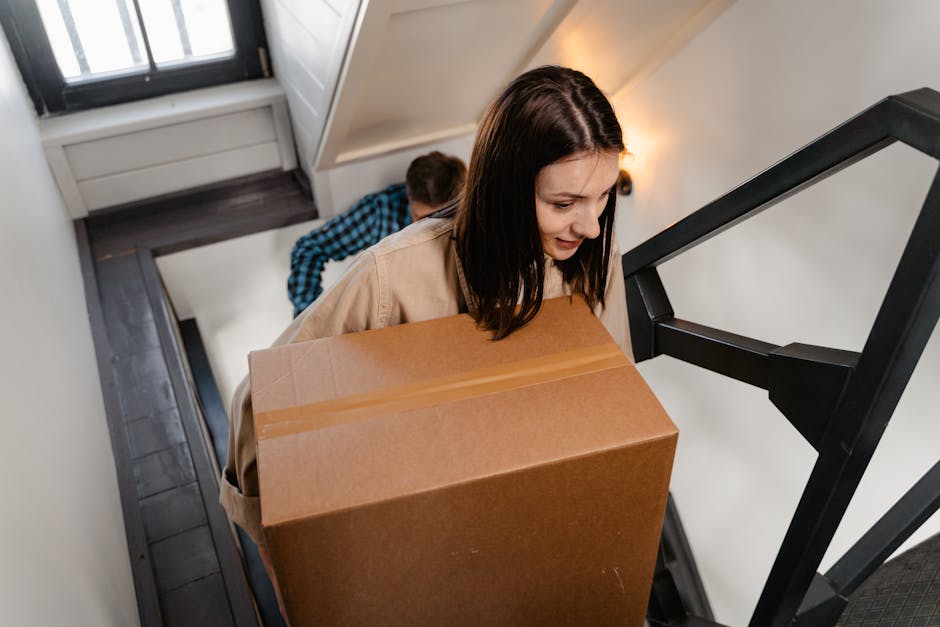
Common Mistakes to Avoid
Most narrow-stair problems come from a handful of predictable mistakes. Avoiding them is half the battle.
- Skipping measurements: guessing the fit is how people end up wedging furniture on a landing.
- Moving without dismantling: a piece that is too long or too wide often becomes manageable once broken down.
- Using too few people: one person can be enough for small boxes, not for a heavy item on stairs.
- Rushing corners: fast movement on a tight turn is where walls, banisters, and fingers get hurt.
- Ignoring the landing: many items fit the stairs but fail at the landing angle.
- Letting the item scrape as a "temporary" solution: temporary scratches have a habit of becoming permanent.
- Not protecting the route: even a clean move can leave marks if the walls are unprotected.
One especially common mistake is assuming that because the item is light, it must be easy. A lightweight but bulky item can still be awkward on a staircase because it catches air, loses balance, and swings at the wrong moment. A big lampshade, for example, can be strangely annoying. Not joking.
Tools, Resources and Recommendations
For safe narrow-stair handling, the right tools help, but only when they are used sensibly. Over-tooling a move is almost as bad as under-preparing one.
| Tool / resource | What it helps with | Best use |
|---|---|---|
| Moving blankets | Protecting walls, banisters, and furniture edges | Wrapping large items and shielding tight corners |
| Ratchet or carry straps | Improving grip and load control | Heavy items moved by a trained pair or team |
| Furniture sliders | Ground-level repositioning before lifting | Shifting items to the staircase entrance |
| Corner protectors | Reducing impact damage | Hallways, door frames, and stair corners |
| Basic toolkit | Dismantling furniture safely | Removing legs, handles, shelves, or panels |
| Labels and tape | Keeping parts organised | Tracking screws, fixings, and separate pieces |
It also helps to have a solid moving plan and the right transport setup. If you're comparing services, the pages for man with a van in Barbican, man and van in Barbican, and removal van options in Barbican can help you think through what level of support you need.
For broader service planning, the services overview is useful, and if you want to understand how the company approaches risk and handling, the health and safety policy and insurance and safety information are worth reviewing.
Law, Compliance, Standards, or Best Practice
For most household moves, there is no special law saying exactly how a sofa must be carried up a stairwell. Still, best practice matters. Under UK workplace health and safety expectations, moving teams should use sensible manual handling methods, avoid unnecessary strain, and reduce risk through planning and proper technique. That's the practical reality, even if the details vary from job to job.
If you are moving in a shared building, common-sense property care matters too. Keep communal areas clear, avoid blocking access, and protect shared surfaces. In rental moves, it is wise to document the condition of walls or stair edges before the move if there is any chance of pre-existing marks. Nothing dramatic, just sensible.
Insurance is another important part of the picture. If something is valuable or difficult to move, check the cover and understand what is included. Don't assume. If you're comparing providers, the pages for pricing and quotes and terms and conditions can help you see what information you should ask for before moving day.
Where a move involves specialist items or especially tight access, best practice is to slow down rather than force the issue. That's not just cautious advice; it's the sensible professional standard.
Options, Methods, and Comparison Table
There is more than one way to handle a narrow staircase move. The right choice depends on the item, the layout, and how much risk you're willing to tolerate. Here's a practical comparison.
| Method | Best for | Pros | Cons |
|---|---|---|---|
| DIY with helpers | Light to medium furniture | Lower upfront cost, flexible timing | Higher injury risk, harder on tight turns |
| Partial dismantling | Most large household furniture | Easier fit, safer handling, less snagging | Takes extra time, needs tools |
| Professional handling | Heavy, bulky, fragile, or awkward items | Better control, more experience, route planning support | Higher cost than a basic DIY attempt |
| Storage before final move | When access or timing is not ideal | Reduces pressure on moving day, keeps items safe | Extra logistics, storage cost |
If you're not sure which route fits your situation, it can help to think about the item first, not the budget first. A damaged wall or injured back is expensive in a different way. Sometimes the cheaper option is the one that prevents a mistake.
For items that need to be held temporarily, storage in Barbican may be a better short-term solution than forcing a bad stair move. And if you're sorting out the rest of the home at the same time, leaving a home in immaculate condition is a helpful companion guide.
Case Study or Real-World Example
Picture a typical Barbican flat move: a two-seater sofa, a double bed frame, and a tall shelving unit. The stairwell is narrow enough that two people can pass, but not comfortably with a bulky item in hand. The landing is small, the banister sits close to the turning point, and the item has to be angled just right to make the corner.
In a rushed approach, the team lifts the sofa too early, clips the wall, adjusts late, and suddenly the item is stuck at the top of the stairs. Someone pushes from the wrong side, the balance shifts, and everyone has that awkward two-second freeze. Not ideal.
Now the better version. The legs come off the sofa first. The route is cleared. The walls are padded. One person leads from the top, one supports from below, and they pause before the landing to reset the angle. The sofa turns cleanly, with a little tilt and a controlled step. No scrape, no panic. It takes a few extra minutes. Worth every second.
That is usually how safe narrow-stair handling pays off: not by making moving day glamorous, but by making it uneventful. And honestly, uneventful is a lovely outcome.
If your move involves a specific local layout or a Barbican estate flat, the Golden Lane Estate moves guide can give extra local context that's genuinely useful.
Practical Checklist
Use this checklist before attempting a narrow-staircase move. It keeps the job grounded and stops small oversights becoming big ones.
- Measure the furniture and the stair route
- Check door openings, landings, and ceiling clearance
- Remove detachable parts where possible
- Wrap corners and protect delicate surfaces
- Clear the staircase, hallway, and landing completely
- Assign a lead person and simple commands
- Wear grippy footwear and comfortable clothing
- Test the angle before lifting the full weight
- Use protective padding on walls and banisters
- Pause and reassess if the item begins to snag
- Keep children and pets out of the route
- Have a backup plan if the item will not fit
Quick reminder: if the item feels borderline, treat it as borderline. A close fit on paper can become a very awkward fit in real life.
Conclusion
Narrow staircase moves in Barbican are all about control, not heroics. Measure carefully, prepare the route, dismantle what you can, and move at a pace that gives everyone room to think. That approach protects your furniture, your walls, and your back. It also makes the whole day feel calmer, which is no small thing.
If you remember only one thing, make it this: a safe move is usually the one that looks slightly slower but finishes without drama. That's the goal. Clean turns, steady hands, and no unnecessary surprises.
Get a free quote today and see how much you can save.
If you'd like help planning the job properly, explore removal services in Barbican or read more about the team on about us. Sometimes the simplest next step is just getting the right advice before the first box is lifted.